
Colorado DMV Motorcycle Practice Test 54
- Questions25
- Correct to pass20
- Passing score80%
- Minimum age16 years
-
1. Where is a strong crosswind most likely to hit you suddenly?
Show answer
Answer D: Coming out of a tunnel or a cut onto an open bridge
Gusts arrive the moment you leave shelter, which is why bridge approaches and the ends of cuts and tunnels catch drivers out.
-
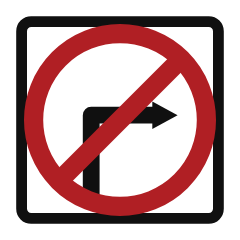
2. A driver's destination lies along the street to the right, and this sign stands at that corner. How should the driver reach it?
Show answer
Answer D: By going on and using a later intersection where turning is allowed
When a movement is barred at one corner the driver has to reroute, normally by continuing and coming back to the destination from a permitted approach.
-
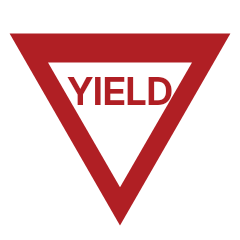
3. A driver passes this sign on an entrance ramp while merging onto a freeway. Who has priority?
Show answer
Answer B: The traffic already traveling on the freeway
The sign places the duty on the entering driver, who must adjust speed and fit into a gap without forcing through traffic to brake or swerve.
-
4. When should a rider add a layer on a ride that is turning cold?
Show answer
Answer D: Before you start to feel cold, at the next convenient stop
Once a rider is chilled it takes a long time to warm up again, and cold hands and slowed reactions cost control, so add layers before the cold takes hold.
-
5. Oil is visible running down the front fork tubes. What does that mean?
Show answer
Answer C: A fork seal has failed and the suspension needs repair
Fork oil escaping past a seal means the front suspension is losing its damping, and the oil can also reach the front brake and ruin its grip.
-
6. You are inside a tunnel with no shoulder when an ambulance comes up behind you with lights and siren. What should you do?
Show answer
Answer D: Keep going at a safe speed and pull over once you are clear of the tunnel
Stopping in a tunnel or on a narrow bridge blocks the only lane, so continue at a safe speed to the first place where you can pull clear.
-
7. May you stop briefly across the sloped ramp that joins the sidewalk to the street at a corner?
Show answer
Answer B: No, that ramp must stay clear for people using wheelchairs
A curb ramp is the only way many people can get from the sidewalk to the crosswalk, so blocking it even briefly is prohibited.
-
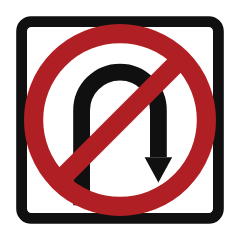
8. Why is this restriction used so often on a divided road just before a crest or a bend?
Show answer
Answer A: Because a vehicle turning across the median there stays hidden from approaching drivers until it is too late
The maneuver needs a long gap and good visibility, and where sight distance is short an approaching driver has no time to react to a vehicle turning across the road.
-
9. Why does even a small reduction in speed matter so much where people are walking?
Show answer
Answer D: Because a pedestrian struck at a lower speed is far more likely to survive
The chance that a pedestrian survives falls steeply as impact speed rises, so a few miles per hour can decide the outcome.
-
10. A hands free phone conversation is which kind of distraction?
Show answer
Answer C: Cognitive, because your mind leaves the road
Hands free equipment removes the manual and visual parts of a call but not the mental load, and it is the mental load that makes a driver miss hazards.
-
11. Cannabis is legal for adults in some states. What does that mean for driving?
Show answer
Answer C: Driving while impaired by it is still an offense
Legal possession has nothing to do with driving law, and every state treats driving while impaired by cannabis as an offense.
-
12. Why do experienced riders cover the clutch lever and the brake lever in heavy traffic?
Show answer
Answer B: It shortens the time needed to react if they suddenly have to stop
With fingers already resting on the levers the rider skips the time it takes to reach for them, which shortens overall stopping distance.
-
13. A steady green arrow pointing left is displayed for your turning lane. What does it tell you?
Show answer
Answer D: The turn is protected because conflicting traffic is being held
A steady green arrow gives a protected movement in the direction shown, although you still yield to pedestrians and to any vehicle already inside the intersection.
-
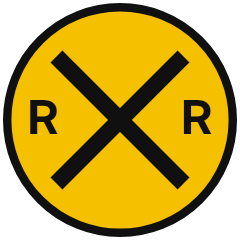
14. This sign leads to a crossing that has no gates and no flashing lights. What does that mean for the driver?
Show answer
Answer D: Nothing will warn of an approaching train, so the driver must check the tracks personally
At a passive crossing there is no active device to announce a train, so the whole judgment rests on the driver, who must approach slowly enough to stop after looking along the track.
-
15. A driver reaches this sign and the intersecting roadway is completely clear. What is required?
Show answer
Answer D: Slowing to a speed that allows stopping, then going on without stopping if the way stays clear
This control asks the driver to slow down and be ready to stop, and a full stop becomes necessary only when traffic or pedestrians would otherwise be interfered with.
-
16. How much clear road do driver manuals say you need before starting a pass at highway speed on a two-lane road?
Show answer
Answer C: Enough to complete the pass and return, roughly ten to twelve seconds of travel
At highway speed the whole maneuver of pulling out, overtaking and returning takes roughly ten to twelve seconds, and every foot of that has to be visible before you start.
-
17. You must slow down in a curve but there is no room to straighten the motorcycle. What should you do?
Show answer
Answer A: Brake gently at first and reduce the lean angle as your speed comes down
Braking and turning compete for the same traction, so brake pressure has to stay light while lean angle is high and can grow as the machine comes upright.
-
18. How does becoming chilled affect a rider before any shivering is obvious?
Show answer
Answer D: It slows reactions and clouds judgment while the rider still feels fine
Cooling degrades reaction time and decision making before the rider notices it, so dress for the coldest part of the ride and stop to warm up rather than pressing on.
-
19. On a long, straight highway you feel your attention fading. What helps you stay alert?
Show answer
Answer A: Keep your eyes moving, scan mirrors and signs, and take regular breaks
Staring at one point brings on highway hypnosis. Active scanning keeps the mind engaged, and a break every couple of hours restores alertness.
-
20. You are in the open lane where another lane is merging into yours. What is your part in the merge?
Show answer
Answer A: Keep a steady speed and leave a gap for one vehicle to come in
A merge works when each driver in the through lane lets one vehicle in, which keeps both lines moving instead of stopping them both.
-
21. On a long uphill grade a second lane opens on the right and a sign directs slower traffic into it. You are towing a trailer and holding up a line of vehicles. What should you do?
Show answer
Answer A: Move into the right-hand lane and let the faster traffic use the left lane
A climbing lane exists so that slow vehicles can be passed safely, and the slower vehicle is the one that belongs in it.
-
22. A NO LEFT TURN sign carries a plaque reading 7 AM TO 9 AM MON TO FRI. What does the assembly mean?
Show answer
Answer A: The turn is banned only during those hours on those days
A time plaque limits the restriction to the periods shown, so outside those hours and days the left turn may be made normally.
-
23. What happens to a motorcycle's ground clearance when a passenger is carried?
Show answer
Answer A: It is reduced, so parts touch down at a smaller lean angle
The extra load compresses the suspension and lowers the machine, so footrests and other parts can drag on the road sooner in a turn.
-
24. How may a two-way left-turn lane never be used?
Show answer
Answer B: As a through travel lane or a passing lane
The lane exists only for turning movements, so traveling or passing along it puts you head-on with vehicles turning from the opposite direction.
-
25. A sign with a blue background and a white legend and border tells road users about
Show answer
Answer A: services such as fuel, food, lodging, hospitals and rest areas
Blue is the background of the general service series, which points travelers toward the services available along or near the route.